
What is ZFUZE® Therapeutic Biomaterial?
ZFUZE therapeutic biomaterial was developed with a patented formulation that provides the beneficial attributes of both PEEK and titanium alloys while overcoming shortfalls in their performance. No single material offers its combination of therapeutic benefits for long-term implantable orthopedic devices.
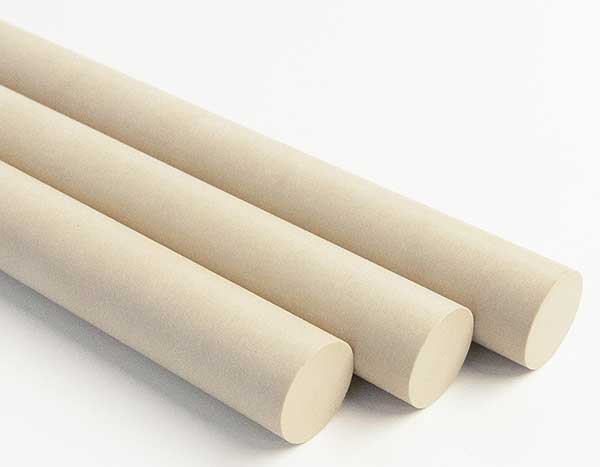
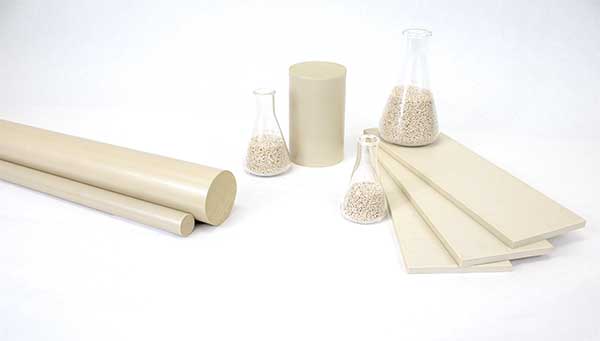
To serve a wide range of applications, it is available in the form of stock shapes for precision machining and as pelletized resin for injection molding.
ZFUZE Therapeutic Biomaterial Offers Benefits Beyond PEEK and Titanium
Because of its osteointegrative properties when implanted, titanium and its various alloys have challenged PEEK as the preferred biomaterial for orthopedic applications. However, its extreme rigidity and its opacity in medical imaging have been drawbacks when compared to PEEK.
ZFUZE biomaterial’s therapeutic efficacy stems from the patented formulation with zeolite molecules integrated into a PEEK polymer matrix. The unique biomaterial bridges the performance gaps associated with natural PEEK and titanium for implanted orthopedic devices and provides a combination of benefits that surpasses both traditional materials:
- Immuno-modulating behavior of ZFUZE biomaterial promotes early healing with a rapid M1-to-M2 phenotype shift that mitigates fibrous encapsulation.
- ZFUZE biomaterial’s osteoconductive properties support effective bone cell fusion and growth, a therapeutic benefit not inherent in natural PEEK.
- Bone-like modulus of ZFUZE biomaterial is far lower than highly rigid titanium and affords excellent biomechanical compatibility for implanted devices.
- ZFUZE biomaterial’s inherent radiolucency allows artifact-free imaging that titanium cannot provide.
FDA-Cleared as an Immuno-modulating Biomaterial
ZFUZE is the first and only FDA-cleared immuno-modulating biomaterial. It has proven its ability to shift macrophages rapidly and predictably from the pro-inflammatory M1 phase to the pro-healing M2 phenotype, an attribute that enables early and effective healing.
Why Was ZFUZE Biomaterial Developed?
Historically, PEEK and titanium have been commonly specified as materials for long-term implantable medical devices. Both have their own distinct benefits for certain applications, but for implanted orthopedic devices, each has its shortcomings.
Spinal implants are the most notable example of devices where immunomodulation, osteoconductivity, biomechanical compatibility with bone and radiolucency are all important benefits but unavailable as a combination of attributes in either PEEK or titanium.
Titanium gained ground initially because of its biocompatibility and osteointegrative properties. However, its far higher rigidity compared to bone could impair healing and create the need for revision surgery. Moreover, its radiopacity as a metal interferes with standard imaging techniques (CT, MRI, CBCT) used to monitor surgical site healing and to survey adjacent structures.
The subsequent introduction of PEEK provided a material with attributes that overcame titanium’s drawbacks, leading to its widespread adoption. One of the polymer’s most beneficial features is its bone-like modulus that made it an attractive alternative to titanium and its various alloys. Surgeons also gravitated toward PEEK because of its radiolucency that allows them to better evaluate whether the bone is healthy and healing properly, compared to the opacity of titanium.
However, the bioinert and hydrophobic attributes of PEEK also limit osteointegration. And while osteointegration is enhanced with titanium, shortcomings associated with the metal’s radiopacity and its high rigidity remain as shortcomings.
ZFUZE biomaterial was developed by DiFusion Therapeutic Biomaterials (Austin, TX) to capture the positive attributes of titanium and natural PEEK for orthopedic surgical implants and provide healing benefits that neither traditional material offers. It achieves this based on a patented composition that promotes early healing and mitigation of fibrous encapsulation, has the osteoconductivity necessary for robust bone cell growth, and offers radiolucency and modulus that approximates bone for greater biomechanical compatibility.
Contact Us
ZFUZE Therapeutic Biomaterial Biocompatibility Documentation
FDA Master File support for MDMs is available with extensive biocompatibility documentation on ZFUZE Biomaterial including ISO 10993 testing and FDA 510(k) submission data. Genesis can provide access to the test reports and other information MDMs may require.
ZFUZE Biomaterial Availability
Stock shapes: Genesis Medical Plastics extrudes ZFUZE resin into rod and plate for machining precision implantable components and devices.
- Standard rod diameters from 6mm to 40mm enable machining of a wide range of device dimensions and design configurations.
- Plate is available in standard thicknesses from 6mm to 25mm, and widths from 305mm to 610mm maximum.
- Custom sizes including larger diameter rod and thicker plate are available.
- All products are made to order, with reasonable minimums to support product development.
Pelletized resin: ZFUZE biomaterial resin is available in pelletized form for producing devices and components by injection molding. In addition to production quantities, Genesis offers low minimums to support MDMs’ at the project development and testing stages.
Genesis-DiFusion Alliance Supports MDMs Worldwide
DiFusion Therapeutic Biomaterials and Genesis Medical Plastics have allied their capabilities to support MDMs on new product projects and ensure reliable supply of ZFUZE biomaterial resin, machinable shapes and parts worldwide.
DiFusion developed ZFUZE® biomaterial and is the IP technology owner. The company is fully focused on the development of materials that work with the body to accelerate healing and improve clinical outcomes.
Genesis Medical Plastics serves as the exclusive producer of ZFUZE™ machinable shapes globally, and is DiFusion’s sole commercial partner in regions outside the United States.
FAQ's About ZFUZE Biomaterial
Can the same grade of ZFUZE biomaterial be both injection molded and machined?
- To meet the MDM industry’s need to manufacture devices in a range of quantities and configurations, the same ZFUZE grade is available in the form of stock shapes for machining and pelletized resin for injection molding.
- Genesis Medical Plastics offers ZFUZE biomaterial in both material forms, and can assist with injection molding and machining guidelines.
How does ZFUZE Biomaterial mitigate the risk of fibrous encapsulation of implants?
By driving a rapid transition from the pro-inflammatory M1 phase to the M2 phenotype, ZFUZE biomaterial has been shown to mitigate fibrous encapsulation of implanted devices and promote pro-healing immunity.
Does ZFUZE biomaterial have the bone-like modulus of natural implantable PEEK?
- Standard ASTM testing shows that the flexural modulus of ZFUZE biomaterial approximates that of bone, as does natural PEEK.
- This is a primary benefit of ZFUZE biomaterial compared to titanium.
Are studies available on ZFUZE biomaterial’s therapeutic efficacy?
- Extensive studies are available on ZFUZE biomaterial’s osteoconductive and osteoimmunological capabilities.
- In collaboration with ZFUZE® technology developer DiFusion Therapeutic Biomaterials, Genesis provides access to all test data and reports as required by device manufacturers.
Does Genesis offer production services for making parts in ZFUZE biomaterial?
- Genesis has extensive capabilities for injection molding ZFUZE resin and for machining components from the stock shapes that the company extrudes from the biomaterial.
- The two processes are commonly used to produce precision parts in implantable polymers including ZFUZE biomaterial.