Implantable PEEK Film for Medical Devices
Genesis Medical Plastics calenders implantable PEEK into film at an ISO 13485:2016 and ISO 9001:2015 certified, FDA registered site in Cypress, Texas. Film calendering is one of four conversion processes run in house, alongside stock shapes extrusion, precision CNC machining and injection molding, which means the film and the machined or molded component built from it can come from one supplier under one quality system.
What Is Implantable PEEK Film?
PEEK film is polyetheretherketone converted into a continuous thin sheet rather than into rod, plate, near net shape or injection molded part. Implantable PEEK film is film produced from implantable grade PEEK resin, handled and documented so that it can be specified in a device intended for contact with tissue.
The important considerations for a device engineer when specifying implantable PEEK film go beyond the polymer and extend to the provenance. Two films of nominally the same PEEK resin can differ in thermal history, crystallinity and contamination control, and those process-based differences show up in mechanical behavior and in what a submission can support. Genesis PEEK stock is ASTM F2026 compliant, and film is produced under the same process validations, IQ, OQ and PQ, that govern its other three conversion routes.
Very few converters produce implantable PEEK film. Most polymer suppliers sell resin, and most film houses do not work to a medical quality system. That combination is the reason this is a narrow field.
How Is Implantable PEEK Film Made?
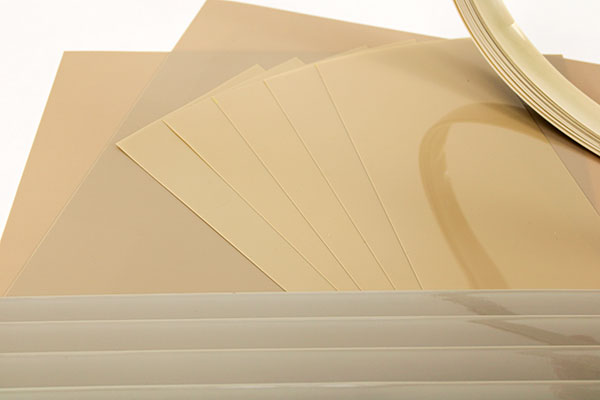
Calendering forms film by drawing melted polymer through a series of heated, precisely gapped nip rolls. The polymer is brought to a working temperature, then progressively reduced in thickness as it passes through each nip, with the final gap and the cooling profile setting thickness and surface finish.
Calendering is not extrusion and not casting, and the difference is practical. Because the material is worked mechanically between rolls rather than pushed through a die, calendering handles high viscosity polymers and holds thickness across the web width in a way that suits a stiff, high melt temperature polymer like PEEK.
Three variables carry most of the outcome:
- Roll gap and roll temperature, which set nominal thickness and the thickness tolerance across the web.
- Line speed and cooling rate, which influence crystallinity and therefore stiffness and dimensional stability.
- Material handling before and after the line, which is where contamination control and traceability are either maintained or lost.
Genesis calenders implantable PEEK film and thin sheet in standard thicknesses from 0.125 mm (0.005 in.) to 1.016 mm (0.040 in.), and custom gauges can be produced with reasonable minimum run requirements. Standard production width is 100 mm, with custom slit widths and custom lengths available. Melt temperatures and roll pressures are tightly controlled and maintained to minimize internal stresses in the film, and a dedicated closed-loop material handling system eliminates the risk of airborne contaminants.
What Are Typical PEEK Film Applications?
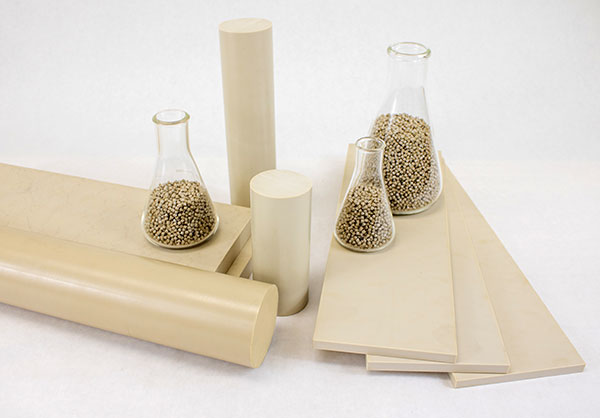
PEEK film is specified where a device needs the chemical resistance, sterilization tolerance and mechanical stability of PEEK in a thin form:
- Spinal and orthopedic devices, as bearing, shim, spacer and insulating layers within an implant assembly.
- Cardiovascular devices, where thin section stability and repeat flex matter.
- Surgical instrumentation, as insulating layers and low friction surfaces in reusable instruments that see repeat sterilization.
- Analytical and diagnostic equipment, as seals, diaphragms and chemically resistant barriers.
- Electrical insulation within a device, where PEEK’s dielectric behavior and thermal stability are both required.
How Are Parts Made From Implantable PEEK Film?
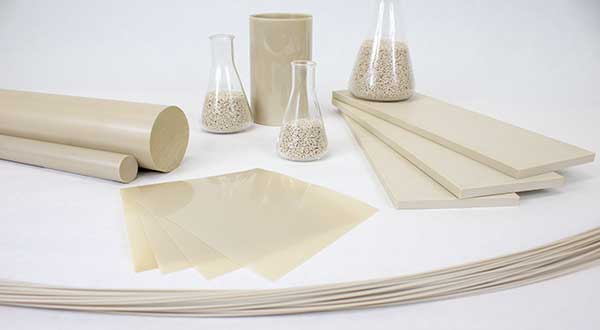
Film is rarely the finished part. It is fabricated, and the fabrication method depends on the geometry:
- Die cutting and kiss cutting for flat profiles produced in volume.
- Laser and waterjet profiling for tight internal features and short runs.
- Thermoforming where the part needs a formed rather than flat geometry.
- Machining of film laminates where thickness is built up before cutting.
- Insert and overmolding, where film becomes a layer within a molded assembly.
Genesis supports MDMs on requirements from prototypes through full-scale commercial volumes on the same equipment and the same validated processes, so a geometry proven at prototype does not have to be requalified for production.
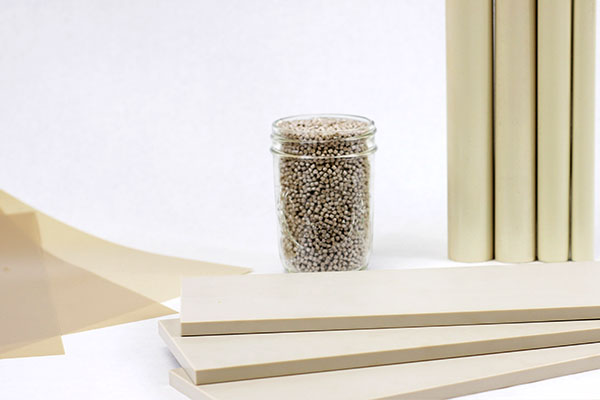
Genesis Medical Plastics Capabilities in PEEK Film
Genesis converts implantable PEEK and other high performance medical polymers through four processes in one plant: stock shapes extrusion, PEEK film calendering, precision CNC machining and injection molding. Film can be supplied as stock for the customer to convert, or Genesis can carry the part through profiling and finishing as a contract manufacturing or tolling program.
The quality system is ISO 13485:2016 and ISO 9001:2015 certified. The site is FDA registered. Conversion processes carry IQ, OQ and PQ validations, and Genesis PEEK stock is ASTM F2026 compliant.
Specifications
| Property | Value |
|---|---|
| Standard thicknesses | 0.125 mm (0.005 in.), 0.254 mm (0.010 in.), 0.508 mm (0.020 in.), 0.762 mm (0.030 in.), 1.016 mm (0.040 in.) |
| Custom thicknesses | Custom gauges available, with reasonable minimum run requirements |
| Width | 100 mm standard production width; custom slit widths and custom lengths available |
| Grades available as film | Implant grade PEEK resin compliant with ASTM F2026-17; Invibio, Syensqo Zeniva and Evonik Vestakeep implant PEEK resins on a custom basis |
| Standard compliance | ASTM F2026-17 |
| Quality system | ISO 13485:2016, ISO 9001:2015, FDA registered site |
| Process validation | IQ, OQ, PQ |
How Does Calendered Film Compare to Extruded or Cast Sheet?
Three process routes produce thin PEEK, and each one yields different results in performance and the configurations possible:
Extrusion pushes molten polymer through a flat die. It suits thicker sheet production and it is efficient, but holding a tight thickness gets harder as the section thins. Producing extremely thin sections can also create a longer thermal history for the melt, and the pressures needed to push molten PEEK through a very thin die can create residual stresses that may be difficult to relieve as the film exits the die.
Casting from a solvent solution is not practical for PEEK at production scale because of its inherent solvent resistance, which is one of the reasons the material is specified in the first place.
Calendering works the polymer melt mechanically between heated, precisely gapped rolls. For a stiff, high melt temperature polymer it holds thickness across the width and produces film with precise tolerances and a consistent surface finish that are beyond the capabilities of a typical plate or sheet extrusion die.
The practical consequence for a device engineer is thickness consistency. A shim or bearing layer that varies across its width changes the load distribution in the assembly, and that variation is set by the conversion route rather than by the resin.
What Tolerances and Properties Should Be Specified on Film?
Four things belong on a film drawing, and thickness alone is not enough.
Nominal thickness and its tolerance, stated as a percentage of nominal rather than an absolute, because percentage is how calendering actually behaves.
Width and edge condition, since a slit edge and a cast edge do not perform the same way in a die cutting operation downstream.
Surface finish, where the film is a bearing or sealing surface.
Crystallinity or thermal history, where dimensional stability under service temperature matters. This is the property most often omitted and most often the cause of a part that passes incoming inspection and fails in the assembly.
Which PEEK Grades Are Available as Film?
Genesis implantable PEEK film is calendered from implant grade PEEK resin that complies with ASTM F2026-17 requirements for mechanical properties and biocompatibility. On a custom basis, Genesis also produces implantable PEEK film and thin sheet from other resin manufacturers’ materials, such as Invibio, Syensqo Zeniva and Evonik Vestakeep implant PEEK resins.
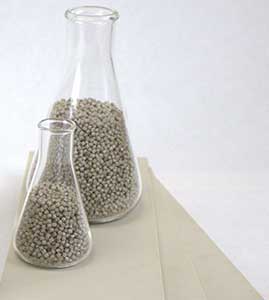
PEEK Film Properties for Medical Device Design
PEEK films are specified for the same reasons PEEK is specified in rod and plate. The polymer properties carry into the thin section. What changes is how they are measured and toleranced. The sections below cover the property groups a device engineer usually checks first.
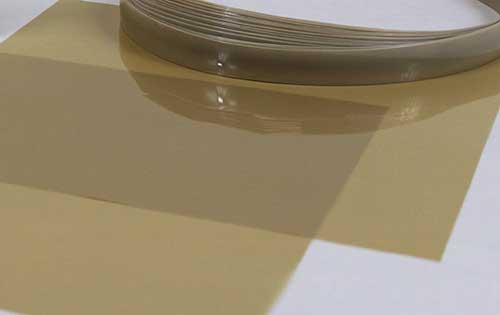
Thermal Performance at Elevated Temperatures
PEEK is a semi crystalline, high performance thermoplastic with a high glass transition temperature of 150°C and a high melting point. PEEK film keeps its stiffness and dimensional stability at temperatures that soften many engineering plastics, so it holds its shape during production steps such as bonding and overmolding, and during repeat sterilization.
Chemical and Hydrolysis Resistance
PEEK resists most acids, bases, oils and organic solvents, along with the detergents and disinfectants used in the healthcare environment. Concentrated sulfuric acid is the main exception. Hydrolysis resistance means hot water and steam do not break down the polymer the way they break down polyesters or polycarbonate.
Mechanical Strength, Toughness and Wear Resistance
Tensile strength, elongation at break and toughness are all high for a thermoplastic film. PEEK also has good fatigue and wear resistance and a low coefficient of friction against many counterfaces, which is why it is used for bearing and shim layers. Crystallinity, set by the calendering line, affects all of these properties, so it belongs on the drawing.
Sterilization and Radiation Resistance
PEEK tolerates steam, ethylene oxide and gamma radiation without the embrittlement that radiation causes in many polymers. Before relying on any sterilization method for a film part, check it against the specific grade, thickness and cycle. See the medical grade PEEK technical datasheet for published property values.
How PEEK Film Compares to Other High Performance Films
Engineers usually compare PEEK film with polyimide, fluoropolymer and polysulfone films. Each one wins in different places.
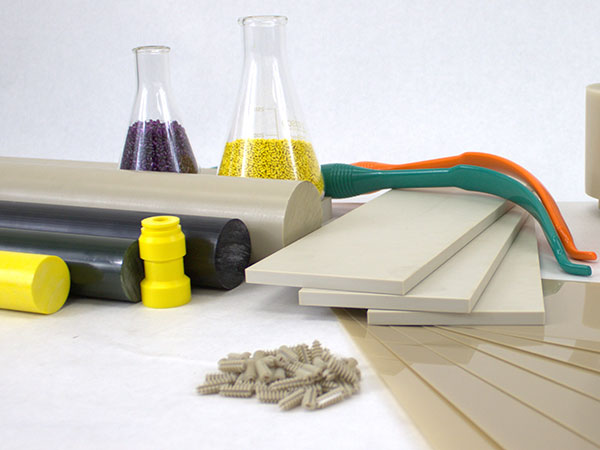
PEEK Film vs Polyimide Film
Polyimide film handles higher temperatures but is not melt processable. It cannot be thermoformed, heat sealed or overmolded the way a thermoplastic can, and it absorbs more moisture. PEEK film can be thermoformed and welded. That matters when the film has to become a formed part, or a layer inside a molded assembly.
PEEK Film vs PTFE and FEP Films
Fluoropolymer films have lower friction and broader chemical inertness, but they are much weaker and creep under load. When a thin layer has to carry load or keep its dimensions in an assembly, PEEK is usually the better choice.
Where PEEK Film Is Used Outside Medical Devices
Outside medical devices, PEEK film is used in aerospace insulation, electronics, flexible circuits and acoustic membranes, where its thermal and chemical stability serve the same purpose. For a device program, the difference is the implantable grade documentation and the medical quality system behind the film, not the polymer itself.
Request a Quote for Implantable PEEK Film
Send a drawing, a thickness and a grade, and Genesis will quote film as stock or as a finished profiled component. Request a Quote, or Contact Our Experts to talk through a film specification with an engineer. Call 281-255-6848.
FAQs: Implantable PEEK Film
What thicknesses of implantable PEEK film does Genesis produce?
Standard thicknesses are 0.125 mm (0.005 in.), 0.254 mm (0.010 in.), 0.508 mm (0.020 in.), 0.762 mm (0.030 in.) and 1.016 mm (0.040 in.). Custom gauges can be produced with reasonable minimum run requirements.
Is calendered PEEK film different from extruded PEEK sheet?
Yes. Calendering forms film between heated, precisely gapped rolls rather than pushing polymer through a die. For a high viscosity, high melt temperature polymer like PEEK, calendering holds thickness across the web and produces a consistent surface finish in thin sections where extrusion is less suited.
What sterilization methods is implantable PEEK film compatible with?
Genesis implantable PEEK film is compatible with all common methods of sterilization, including steam autoclaving, ethylene oxide gas, vaporized hydrogen peroxide and high-energy gamma radiation.