Biocompatibility and ISO 10993 for Implantable Polymers
Biocompatibility is a property of a finished device in a defined use, not a property a polymer carries on its own. For a device engineer specifying an implantable plastic, that distinction decides what the material supplier can and cannot tell you, and what your own test plan still has to cover.
What biocompatibility means in ISO 10993 terms
ISO 10993 is a series of standards covering the biological evaluation of medical devices. Evaluation is driven by the nature and duration of body contact, not by the material name. A polymer used in a surface device with limited contact is evaluated against a different endpoint set than the same polymer used in a permanent implant.
This is why a resin producer’s statement that a grade has been tested to parts of ISO 10993 is a starting point for a submission and not a substitute for one. The device manufacturer owns the biological evaluation of the finished device, in its final form, after its final sterilization.
Laboratory evaluation of a material sample.
Why the finished form matters more than the resin
Three things change between a pellet and an implant, and all three can affect biological response.
Machined PEEK rods and discs.
Processing history
Thermal history during extrusion, molding or machining can change crystallinity, residual stress and surface chemistry. Two parts from the same lot of resin, converted differently, are not automatically equivalent.
Surface condition
Machining marks, residual cutting fluid, cleaning agents and handling all sit on the surface the tissue actually meets. Cleanliness validation and documented cleaning are part of biological safety, not a separate housekeeping matter.
Sterilization
The sterilization method is part of the device definition for biological evaluation. A polymer that is stable to steam may respond differently to gamma or ethylene oxide, and residuals from the process itself are an evaluation endpoint. See sterilization compatibility of medical polymers.
What Genesis can document
Genesis is a polymer conversion manufacturer. We convert implantable PEEK and other high performance polymers into stock shapes, film and finished components under an ISO 13485:2016 and ISO 9001:2015 certified quality system, at an FDA registered site, with IQ, OQ and PQ process validations.
What that gives a device manufacturer building a biological evaluation file is material identity and process control: which resin and grade, which lot, which conversion process, and evidence that the process ran within validated parameters. Genesis PEEK is ASTM F2026 compliant.
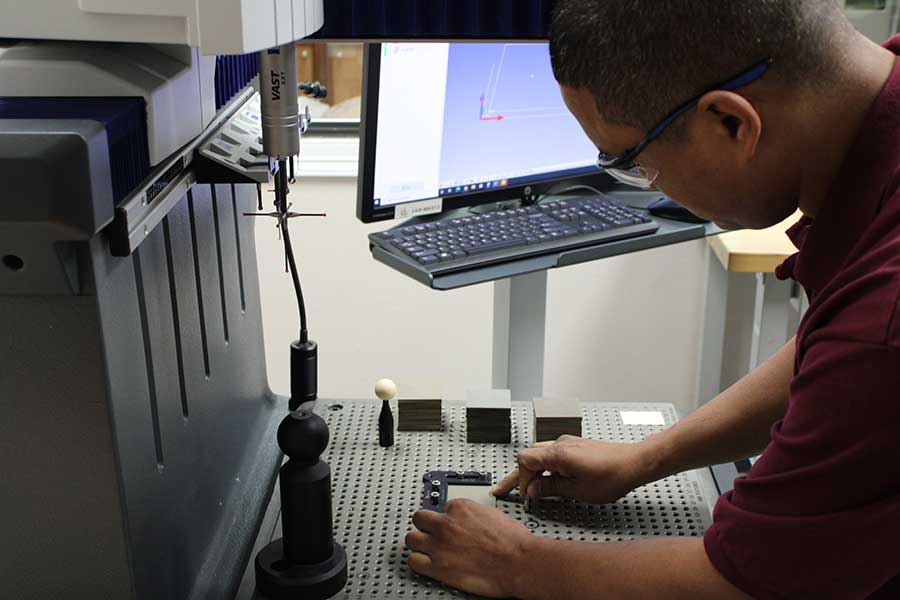
Quality inspection of machined parts.
Master files and letters of access
Some resin producers maintain a master file with the FDA covering their implantable grades. A device manufacturer may be granted a letter of access so the reviewer can consult that file. A master file is not an approval or a clearance. The FDA does not approve or clear a material or a master file; it reviews devices.
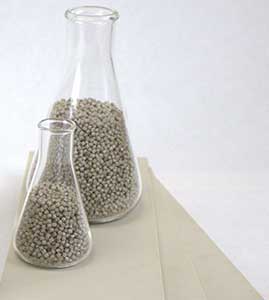
Implant grade PEEK resin.
Where this sits in material selection
Biocompatibility rarely decides a material on its own, because the candidate grades for an implantable application have usually all cleared the same threshold. The deciding factors are mechanical behavior, sterilization compatibility, imaging behavior and conversion economics. See the materials hub and implantable medical devices.
If you are assembling a biological evaluation file and need to know what Genesis can supply for a given grade and conversion route, contact our experts or request a quote.
FAQs: Biocompatibility and ISO 10993 for Implantable Polymers
Is PEEK biocompatible?
Biocompatibility is assessed for a finished device in a defined use, not for a polymer in isolation. Implantable PEEK grades are widely used in long term implants, but the biological evaluation belongs to the device and its final form, sterilization and contact duration.
Does ISO 10993 testing on the resin cover my device?
No. Resin level data supports an evaluation but does not replace it. Processing, surface condition and sterilization all change between pellet and finished device.
What does ASTM F2026 cover?
ASTM F2026 is the standard specification for polyetheretherketone polymers for surgical implant applications. Genesis PEEK is ASTM F2026 compliant.
Can Genesis provide lot traceability for implantable material?
Genesis operates an ISO 13485:2016 certified quality system with validated processes. Confirm the specific records available for your grade and conversion route with Genesis engineering.