Genesis Medical Plastics offers polymer conversion on a tolling basis, converting customer supplied material through extrusion, film calendering, precision CNC machining and injection molding at an ISO 13485:2016 and ISO 9001:2015 certified, FDA registered site in Cypress, Texas.
What Does It Mean If a Manufacturer Offers Tolling Services?
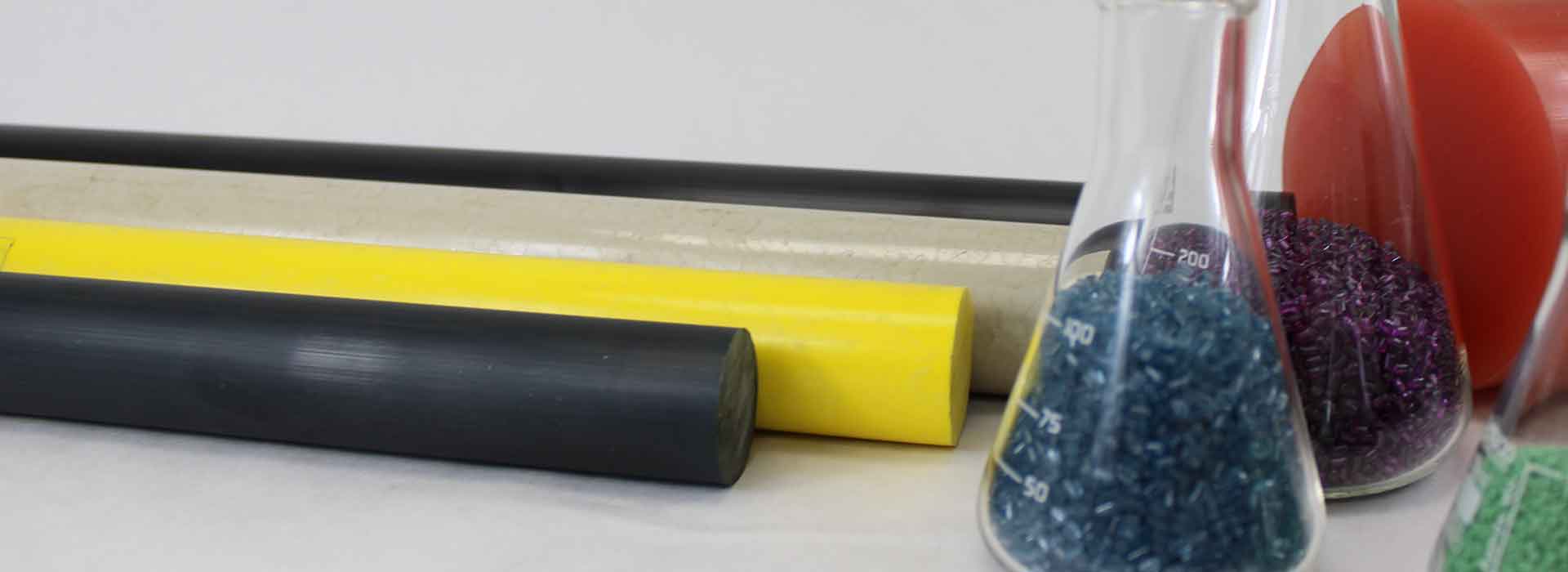
Under a tolling agreement the customer supplies the material and the converter supplies the process. Genesis takes in customer owned resin or stock, runs it through a defined conversion process, and returns converted material or finished components. Title to the material stays with the customer throughout.
Tolling is the right structure when a customer already controls its material supply, whether through an existing resin agreement, a qualified lot it cannot deviate from, or a proprietary or filled formulation it does not want to release. The customer keeps the material relationship and buys capability.
Which Conversion Capabilities Are Available on a Tolling Basis?

Genesis runs four conversion processes in one plant:
- **Stock shapes extrusion**, converting resin into rod, plate and profiles.
- **PEEK film calendering**, converting stock into film.
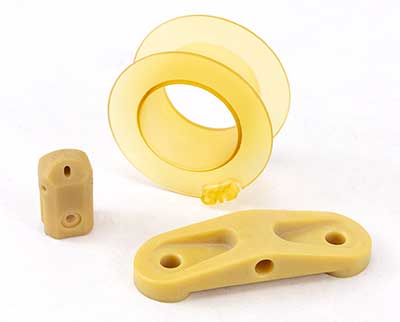
- **Precision CNC machining**, converting stock shapes into finished components.
- **Injection molding**, converting resin into molded components and near net shapes.
Genesis also processes highly filled compounds that many converters decline, which is frequently the reason a tolling inquiry arrives in the first place: the customer has a formulation nobody will run.
What Are the Differences Between Tolling and Contract Services?
The difference is who owns the material and who owns the specification.
| | Tolling | Contract manufacturing |
| , – | , – | , – |
| Material supplied by | Customer | Genesis |
| Title to material | Customer throughout | Genesis until delivery |
| Material sourcing and qualification | Customer | Genesis |
| Process | Genesis | Genesis |
| Typical reason to choose it | Existing resin agreement, qualified lot, or a proprietary or filled formulation | Single source responsibility for material and process |
Neither is better. They answer different questions. A program that has already qualified a resin lot and cannot requalify tolls. A program that wants one supplier accountable for material and conversion together contracts.
What Certifications Should a Toll Converter Have for Medical Devices?
A toll converter handling material destined for a medical device should be held to the same standard as a contract manufacturer, because the conversion process is where the material’s thermal history and contamination exposure are determined. A qualification screen should expect:
- **A medical device quality management system**, ISO 13485 rather than ISO 9001 alone, because ISO 13485 adds the design control, risk management and traceability requirements that regulated device manufacture needs.
- **FDA establishment registration**, where the component is destined for the US market.
- **Documented process validation**, IQ, OQ and PQ, on the specific processes that will run the material.
- **Material traceability**, so converted material can be tied back to the incoming customer lot.
- **Biocompatibility data under the ISO 10993 series**, evaluated at the level appropriate to the material and the device contact type. In a tolling arrangement this normally sits with the customer, because the customer owns the material, but the converter’s process still has to be documented well enough to support it.
Genesis holds ISO 13485:2016 and ISO 9001:2015 certification, is an FDA registered site, and runs IQ, OQ and PQ validated conversion processes.
How Can Tolling Benefit a Smaller OEM?
A smaller program often cannot justify its own extrusion or molding capacity, and cannot meet a resin producer’s minimum order for a specialty grade. Tolling lets it buy conversion capability without buying equipment, while keeping the material relationship it already has.
It also shortens the path from prototype to production. Material qualified at prototype scale can be converted on the same validated processes at production scale, so the program does not requalify a material source in order to scale.
What Does a Toll Converter Actually Take On?
A tolling agreement moves risk as well as work, and it is worth being explicit about which risk sits where. The customer keeps the material risk: sourcing, qualification, lot approval and the cost of a bad lot. Genesis takes the conversion risk: yield, dimensional conformance, contamination control and the documentation that proves what happened to the material while it was in the plant.
That split is the reason tolling exists. A program that has spent months qualifying a resin lot does not want a converter buying material on its behalf. It wants the lot it already trusts, converted on equipment it can audit.
What Capacity and Volume Can Genesis Commit To?
Capacity is usually the first question a sourcing manager asks and the one most converter pages avoid. Genesis runs four conversion processes in one plant, which means a tolling program is not competing for a single machine, and a change in form does not mean a change in supplier.
What can be said without a number: because extrusion, calendering, machining and molding sit under one roof and one quality system, a program can move between forms as it scales without requalifying a supplier.
How Much Documentation Comes Back With the Material?
For a medical program the converted material is only half the deliverable. The other half is the record. A toll conversion at Genesis is run on processes carrying IQ, OQ and PQ validation, and the material is tracked from the incoming customer lot through each conversion step.
Where Tolling Saves Money and Where It Does Not
Tolling is cheaper than building capability and more expensive than buying a commodity part. It pays when the material is the constraint: a specialty grade with a high minimum order, a qualified lot that cannot be re-sourced, or a formulation the customer developed and does not want to release.
It does not pay when the customer has no material relationship to protect. In that case contract manufacturing is simpler, because one supplier owns both halves and there is one party to hold accountable.
What Flexibility Does a Tolling Agreement Give an OEM?
Three things, in the order OEMs tend to value them. Specification control, because the customer defines the material and Genesis works to it rather than substituting. Scheduling flexibility, because a toll program can be sized to a production window rather than a purchase order minimum. And exit flexibility, because the customer retains the material relationship and is not locked into a converter’s supply chain.
Request a Quote for Tolling Services
Send the material, the process and the volume and Genesis will quote a tolling program. Request a Quote, or Contact Our Experts to talk it through with an engineer. Call 281-255-6848.
FAQs for
What is the difference between contract manufacturing and tolling?
Under tolling the customer supplies the material and Genesis supplies the conversion process, with title to the material remaining with the customer. Under contract manufacturing Genesis supplies both the material and the process. Programs with an existing resin agreement or a qualified lot typically toll; programs wanting single source responsibility typically contract.
Which conversion processes can Genesis run on a tolling basis?
Who owns the material during a tolling program?
Will Genesis run a filled or proprietary formulation?
Genesis processes highly filled compounds that many converters decline.
What quality certifications does Genesis hold?
ISO 13485:2016 and ISO 9001:2015. The site is FDA registered and conversion processes carry IQ, OQ and PQ validations.